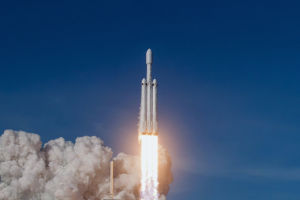
Space launches always feel like a moment of wonder, but behind that short lift-off is a long chain of precise steps. A rocket does not simply leave Earth in one move.
Instead, every stage is carefully planned and controlled, from ground preparation to the moment a satellite successfully begins its work in orbit. Let us follow this journey in a clear and simple way.
Careful Preparation Before Launch
Before launch, the rocket undergoes very detailed preparation. Most modern rockets use low-temperature liquid propellants such as liquid oxygen combined with kerosene or liquid hydrogen.
About 24 hours before liftoff, fuel loading begins. But before that, inert gas is used to clean the tanks and pipelines. This removes dust and tiny particles inside the system.
Because the fuel is extremely cold and sensitive, the tanks must be cooled first. Then fuel is added slowly to avoid instability. After that, the filling continues until the required level is reached.
System Power On and Final Checks
About one hour before launch, all rocket systems are powered up. Mission data and flight instructions are uploaded into the onboard computer.
Then a full self-check begins. The rocket tests its engines, sensors, communication systems, and guidance controls.
If everything works normally, the system is cleared for launch. Sometimes a small fuel adjustment is made at this stage to ensure full readiness.
Lift-Off and Programmed Turn
After ignition, the rocket rises straight up for about 10 seconds. Then it enters a controlled movement called a programmed turn.
The engines can adjust their direction, allowing the rocket to tilt gradually. This helps it follow an efficient curved path instead of going straight up.
This step is very important because it saves fuel and helps the rocket reach the correct orbit path.
Booster and Stage Separation
Around 170 seconds after launch, the first separation occurs. Boosters detach from the main rocket using controlled separation devices.
At this time, the rocket is already very high above Earth and moving extremely fast.
Next, the first stage separates from the second stage. The first stage shuts down, and the second stage engine ignites immediately. This keeps the rocket moving without losing speed.
Fairing Separation
About 30 seconds later, the rocket reaches an altitude where Earth’s atmosphere becomes very thin.
At this point, the protective cover, known as the fairing, is no longer needed.
It opens and separates into two halves. This allows the satellite to continue its journey without protection from air pressure.
From here, the second stage continues pushing the payload forward.
Final Push into Orbit
Around 400 seconds after launch, the rocket reaches very high speed. The second stage finishes its job and shuts down.
Then an upper module takes over. It may ignite more than once to adjust speed and direction precisely.
Its goal is to reach the exact speed needed for orbit. Once this is achieved, the satellite is released.
Satellite Activation in Space
After separation, the satellite begins its independent operation. At first, it uses internal batteries for power.
Most satellites later rely on solar panels. These panels are folded during launch and must open correctly after reaching orbit.
If the panels fail to open, the mission may not succeed because the satellite would lose its main energy source.
Once deployed, the satellite begins generating power and activates its systems.
Why Every Step Is Critical
Each stage of the launch process must work perfectly. Even small errors in timing, fuel, or system performance can affect the result.
If the rocket does not reach the correct speed or altitude, the satellite may not enter orbit.
Some satellites can adjust slightly using their own engines, but this reduces their working life.
If no correction is possible, the mission cannot be recovered.
Amazing Journey Conclusion
Rocket launches show how precision and engineering come together to achieve space exploration. Every second from fueling to orbit insertion is carefully controlled.
Even though the entire process takes only minutes during launch, it represents years of planning and testing.
So Lykkers, which step do you think is the most exciting in a rocket launch journey?
How Do We Launch Things into Space?
Video by NASA Space Place