You've probably seen your cat's tail do a dozen different things in a single afternoon and wondered what any of it meant.
A tail held high, a tail that whips, a tail that suddenly doubles in size. Cats don't meow these signals; they show them, and the tail is one of the clearest channels they have. Read it right, and you'll know a lot more about what your cat is actually feeling.
A High Tail Means Good News
When your cat walks toward you with the tail straight up and the tip maybe curling slightly, that's a friendly, confident signal. It's the posture cats often use when greeting someone they trust. You'll see it when you come home, and your cat trots over. The tail goes up, sometimes with a little quiver at the base, and that's about as close to "glad you're here" as a cat gets. A relaxed cat holds the tail up, calm and not stiff.
The Slow Sway Is Not a Wag
Dogs wag to show happiness. Cats do not. A slow, low sweep of the tail usually means your cat is focused and working something out, often while watching a bird through the window or deciding whether to pounce on a toy. It's concentration, not joy. If the sway speeds up, your cat is getting more stimulated, and that's the moment to ease off the petting before a swat arrives.
A Fast Flick Signals Irritation
You're stroking your cat and the tail starts snapping side to side in short, quick jerks. That's your cue to stop. A twitching, whipping tail is a clear sign of annoyance or overstimulation, and cats often give it right before they nip or scratch. Watch the tip too. Even a small, sharp twitch while your cat is otherwise still can mean something has caught its attention and it's on edge.
The Puffed Tail Is Pure Fear
A cat that suddenly looks twice its size, tail bristled out like a brush, is scared, not angry. The fur stands up along the tail and often the spine, a reflex that makes the cat look bigger to whatever startled it. You'll see it after a loud noise or when a strange animal appears. Give that cat space and a clear escape route, and don't reach for it. Fear is the emotion most likely to turn into a defensive swipe.
The Tucked Tail Tells You to Back off
A tail curled down and tucked between the back legs points to nervousness or submission. Your cat feels uncertain, maybe in a new room or around an unfamiliar person. A tail wrapped around the body while the cat sits is a similar sign of feeling defensive. Don't force interaction here. Let the cat come to you and the tail will lift again once it settles.
Where the Tail Sits Matters Too
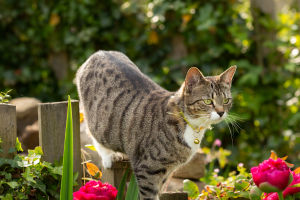
Height tells a story on its own. A tail held straight up says confident. Held level and loose, your cat is relaxed. Dropped low, it's unsure. And the classic question mark, tail up with a bent tip, is a playful, curious mood, the one you'll spot right before a chase around the hallway. Pair the tail with the ears and eyes, and you get a much fuller picture.
The tail is one of the easiest parts of your cat to read once you know the pattern, and it's always talking. Next time your cat flicks its tail at you mid-cuddle, take the hint and let it be, then watch how quickly that high, calm tail comes back.